

What exactly is Sickle Cell Anemia?
It is caused by a change (mutation) in a gene called the HBB gene. This gene provides instructions for making a portion of a protein called hemoglobin, which is found in red blood cells and the main function of hemoglobin is to carry oxygen from the lungs to all parts of the body.
In normal healthy individuals, the hemoglobin is known as hemoglobin A, HbA. However, in sickle cell anemia patients, the gene produces an abnormal type of hemoglobin, called hemoglobin S, HbS.
Why Does Sickle Cell Anemia Happen?
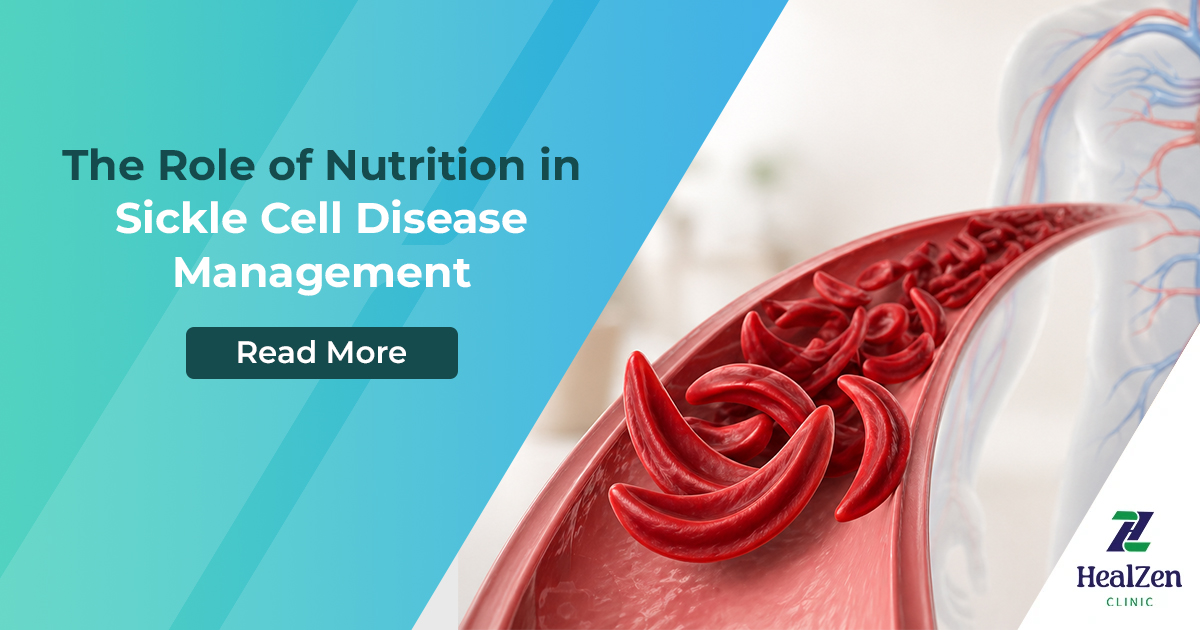
When there is less oxygen in the blood, the hemoglobin S molecules stick together and form hard rod-like structures inside the red blood cells. Because of this, the red blood cells change their normal round shape into a curved or sickle shape, like a C.
These sickle-shaped cells cause several problems:
- They become rigid and sticky, hence unable to move easily through the blood vessels.
- They obstruct small vessels and consequently cut off circulation to parts of the body. This results in extreme pain, called a vaso-occlusive crisis.
- They break down faster than normal red blood cells. While the life of a normal cell is about 120 days, sickle cells survive only for 10–20 days, causing anemia.
- Because the body constantly tries to make new red blood cells, it uses a lot of energy and nutrients and this may lead to fatigue and stunted growth in children.
- The damaged cells weaken the immune system, making patients more prone to infections.
Signs and Symptoms You Should Know –
Sickle cell disease is associated with many health problems, which may be acute or chronic in nature. Some of these can be serious and even life-threatening.
One of the most common and painful problems is called a vaso-occlusive crisis.
Here’s what happens:
- The red blood cells in sickle cell disease have an abnormal sickle-like shape (C-shape).
- These cells are hard and sticky, hence, they stick to the small blood vessels called capillaries.
- When they block the blood flow, oxygen cannot reach the body tissues properly.
- Ischemia is the general term for this oxygen starvation, which leads to serious pain from the affected region, such as the arms, legs, chest, and back.
These painful events may continue from several hours up to a few days. In every individual the frequency and severity of the crises vary, some suffer mildly from time to time, while others may have frequent, very painful attacks.
Chronic Anemia
A main feature of sickle cell disease is chronic (long-term) anemia, which occurs because of the early destruction of sickle-shaped red blood cells.
Normally, red blood cells live for about 120 days, but in sickle cell disease, they survive only about 17 days. This leads to a constant shortage of red blood cells, causing fatigue and weakness.
Also, the body doesn’t produce enough new red blood cells quickly, because the kidneys don’t release enough erythropoietin, often due to mild kidney problems.
Nutrition for Sickle Cell Disease (Tips) –
People with sickle cell disease require extra nutrition care, as their bodies work harder than usual.
- They have a higher metabolic rate, meaning their bodies use more energy and nutrients to make new red blood cells and repair damaged tissues.
- Because of this, they must have a calorie and protein-enriched diet in order to stay healthy and maintain body strength.
Folic Acid (Vitamin B9)
- Sickle cell disease is characterized by increased destruction of red blood cells, a process called hemolysis.
- The body needs additional folic acid to produce new red blood cells.
- Normally, a daily requirement for folic acid is about 50 µg, while in sickle cell disease, a dose of 500 µg (0.5 mg) per day may be necessary.
- Since the folate in foods is destroyed by cooking, deficiency of it is common, so doctors often give supplements of folic acid in the form of tablets.
Zinc:
- Red blood cells are rich in zinc, which contributes a lot to growth, immunity, and healing.
- Sickle cell patients experience increased loss of zinc, so they should consume zinc-rich nuts, whole grains, and dairy products.
Iron:
- The sickle cell patient may be exposed to too much iron within the body, which may be through regular blood transfusions.
- Extra iron can build up in the liver and other organs, causing problems.
- That’s why iron supplements are not given unless a doctor confirms iron deficiency through tests.
The Importance of Staying Hydrated –
Maintaining fluid intake is very crucial among individuals with sickle cell anemia.
If the body loses too much water, blood becomes thicker. Thick blood can trigger painful crises when sickle cells block the flow of blood in vessels.
Adequate fluid intake will keep the blood thin and allow it to flow with ease. This is especially crucial in states of fever or during hot weather, whereby more water is lost through sweating.
Blood Transfusions (A Lifesaving Support) –
Blood transfusions are an important treatment for individuals with sickle cell disease, especially in the case of severe attacks or when the blood count has gone too low.
It assists in the addition of healthy red blood cells from a donor, improving the amount of oxygen carried in the blood, hence reducing complications.
When blood transfusion is required:
- When the hemoglobin level falls below 4–5 g/dL, very low.
- During serious infections that make the disease worse.
- Before any emergency or planned surgeries, to ensure the body has adequate numbers of healthy red blood cells.
Type of blood used:
- Usually, only packed red blood cells are transfused, not whole blood.
- This helps increase the level of hemoglobin without adding too much extra fluid, which could overload the heart or cause swelling.
Summary:
SCD is caused by a mutation in the HBB gene that codes for an abnormal hemoglobin called hemoglobin S (HbS). This results in the red blood cells becoming inflexible, sticky, and sickle-shaped, impairing their oxygen-carrying ability and smooth flow through blood vessels.
Consequently, patients frequently suffer from vaso-occlusive crises (episodes of severe pain resulting from impeded blood flow), along with symptoms of fatigue, anemia, and frequent infections.
Due to sickle cells being more prone to destruction, SCD patients suffer from chronic anemia and have higher requirements for calories, proteins, and folic acid to produce red blood cells.
Include zinc-containing foods in the diet. Avoid iron supplements because iron overload can occur with frequent blood transfusions. Adequate fluid intake is advised to avoid dehydration, a common precipitating factor for painful crises.
Blood Transfusions: The purpose of blood transfusions in Sickle Cell Disease is to increase the level of hemoglobin to manage complications. This procedure needs to be closely monitored to avoid potential risks such as iron build-up (haemosiderosis). Many of the complications of sickle cell disease are manageable with appropriate nutrition, hydration, and medical care.


 Need Help