

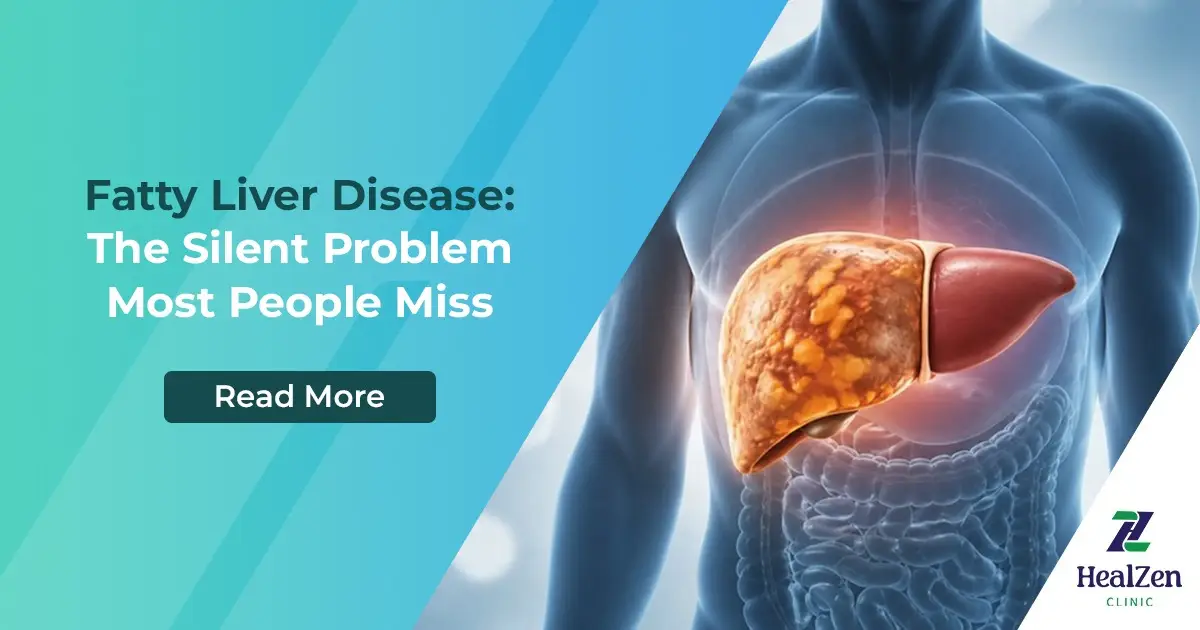
You could feel completely fine… and still have a growing health issue inside your body. That’s the unsettling reality of fatty liver disease.
It doesn’t begin with pain. It doesn’t interrupt your routine. And most of the time, it doesn’t even show symptoms. Yet today, it’s one of the most common health conditions in the world.
The Condition You Don’t See Coming
Fatty liver disease, now called MASLD (Metabolic Dysfunction-Associated Steatotic Liver Disease), is not just about the liver. It’s about how your body is handling:
- Sugar
- Fat
- Energy
- Overall metabolic stress
And here’s what makes it tricky:
- You don’t need to drink alcohol to develop it
- You don’t even need to look “unhealthy”
- You might not feel anything at all
That’s why millions of people have it without knowing.
What’s Actually Happening Inside Your Body?
Your liver is one of the most hardworking organs you have. It manages everything from detoxification to energy regulation.
But when your metabolism is under strain, fat starts accumulating inside liver cells. Once it crosses a certain level, it becomes a medical condition.
At first, it may seem harmless. But over time, this buildup can:
- Interfere with normal liver function
- Trigger inflammation
- Lead to long-term damage
And all of this can happen silently.
Take Control Before It Progresses
If you’re already thinking about reversing the condition, one of the most common questions people have is how long it actually takes. Understanding your fatty liver recovery time can help you set realistic expectations and take the right steps early—before the condition moves to advanced stages.
Why This Is Becoming So Common
This isn’t random—it reflects how modern life has changed.
Today:
- Processed food is everywhere
- Physical activity has dropped
- Sleep is irregular
- Stress is constant
And your body is constantly trying to keep up.
- Around 1 in 3 adults globally are affected
- Most people with diabetes have it
- Even children are now being diagnosed
This is no longer rare—it’s becoming the norm.
It’s Not One Disease – It’s a Journey
Fatty liver develops in stages:
- Stage 1: Fat buildup (early and reversible)
- Stage 2: Inflammation begins
- Stage 3: Scarring develops
- Stage 4: Severe damage (cirrhosis)
- Stage 5: Risk of liver cancer
The problem? Most people don’t realise where they are on this journey.
The Bigger Risk Isn’t What You Think
Fatty liver doesn’t just affect your liver. It significantly increases your risk of:
- Heart disease
- Stroke
- Diabetes complications
In fact, heart-related issues are the leading cause of death in people with fatty liver—not liver failure.
Why Does It Happen?
At the centre of it all is one key issue: Insulin Resistance
When your body stops responding properly to insulin:
- Sugar builds up in the blood
- Fat gets stored in the liver
- Inflammation increases
This is why fatty liver is closely linked to:
- Weight gain
- Diabetes
- High cholesterol
- Blood pressure issues
But It’s Not Just About Weight
One of the biggest misconceptions: “Only overweight people get fatty liver.”
Not true. A significant number of people with fatty liver are lean and often go undiagnosed for longer, which makes awareness even more important.
The Most Dangerous Part? You Feel Fine
Fatty liver is often silent. Most people:
- Have no symptoms
- Feel normal
- Continue daily life without concern
If symptoms appear, they’re often subtle:
- Fatigue
- Mild discomfort
- Low energy
By then, the condition may already be progressing.
Why Early Awareness Matters
Because this condition doesn’t announce itself. And by the time it does, reversing it becomes harder.
The earlier you understand it, the more control you have.

 Need Help