
To know more about your current condition, make an appointment with us now.

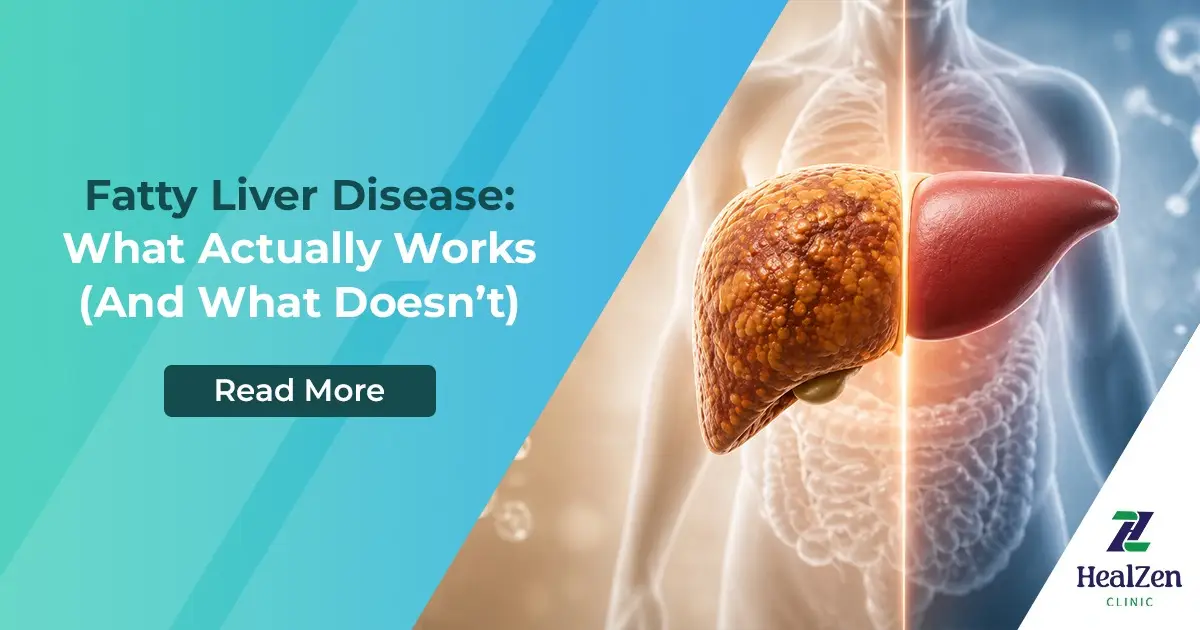
Fatty Liver Disease: What Actually Works (And What Doesn’t)

April 29, 2026by Dr. Apurva Ahirrao
Fatty Liver Disease_ What Actually Works (And What Doesn’t)

Once you know you have fatty liver or even suspect it, the next question is simple:

What can I actually do about it?

The good news is that this is one of the few conditions where your daily choices can genuinely reverse the damage, especially in the early stages.

How Is Fatty Liver Diagnosed?

Most people find out by chance. Doctors usually follow a step-by-step approach:

  • Blood tests to check liver enzyme levels
  • FIB-4 and other risk scoring methods
  • Imaging tests like ultrasound or FibroScan
  • Biopsy only when absolutely necessary

The process today is much more accessible and less invasive than before.

The Most Important Truth: It Can Be Reversed

This is where things become hopeful.

Research shows that losing even 7–10% of body weight can:

  • Reduce liver fat
  • Improve inflammation
  • Reverse early damage

And no—you don’t need extreme diets.

What Actually Works

1. Sustainable Lifestyle Changes

This is the foundation. Focus on:

  • Whole, unprocessed foods
  • Balanced meals
  • Regular physical activity

Consistency matters more than perfection.

2. The Right Way to Eat

A Mediterranean-style diet is highly effective:

  • Whole grains, fruits, and vegetables
  • Healthy fats like olive oil
  • Lean proteins such as fish and legumes
  • Minimally processed foods

It’s sustainable and long-term.

3. Movement Matters (More Than You Think)

Both forms of exercise are beneficial:

  • Cardio (walking, cycling)
  • Strength training

Exercise benefits your liver even without major weight loss.

4. Medical Treatments (For Advanced Cases)

There has been real progress in treatment options:

  • Resmetirom (approved in 2024) targets liver fat
  • Semaglutide and similar medications help improve metabolism

These are especially helpful for high-risk individuals.

What Doesn’t Work (Despite the Hype)

Let’s be clear:

  • Detox drinks
  • Liver cleansing supplements
  • Quick-fix herbal remedies

There is limited scientific evidence supporting these—and in some cases, they may cause harm.

Common Myths That Mislead People

  • “I feel fine, so I’m healthy” — Not always true
  • “Only drinkers have liver problems” — Completely false
  • “It’s just fat, nothing serious” — It affects the whole body
  • “I’m not overweight, so I’m safe” — Not necessarily

What This Really Means for Your Health

Fatty liver is not just a condition—it’s a warning sign.

It’s your body telling you:

  • Your metabolism needs attention
  • Your habits may need adjustment
  • Your long-term health could be at risk

You Have More Control Than You Think

You don’t need to change everything overnight. But small, consistent changes can:

  • Improve your liver health
  • Reduce the risk of serious illness
  • Transform your long-term health

Because this isn’t about one big decision—it’s about what you do every day.
Consent for Telemedicine Services

Telemedicine involves the use of electronic communications to enable health care providers at different locations to share individual patient medical information for the purpose of improving patient care. Providers may include primary care practitioners, specialists, and/or subspecialists. The information is used for diagnosis, therapy, follow-up and/or education, and may include any of the following:

Electronic systems used will incorporate network and software security protocols to protect the confidentiality of patient identification and imaging data and will include measures to safeguard the data and to ensure its integrity against intentional or unintentional corruption.

Expected Benefits:

By signing this form, I understand the following:

  1. I understand that the laws that protect privacy and the confidentiality of medical information also apply to telemedicine, and that no information obtained in the use of telemedicine which identifies me will be disclosed to researchers or other entities without my consent.
  2. I understand that I have the right to withhold or withdraw my consent to the use of telemedicine in the course of my care at any time, without affecting my right to future care or treatment.
  3. I understand that I have the right to inspect all information obtained and recorded in the course of a telemedicine interaction, and may receive copies of this information for a reasonable fee.
  4. I understand that a variety of alternative methods of medical care may be available to me, and that I may choose one or more of these at any time. My doctor has explained the alternatives to my satisfaction.
  5. I understand that telemedicine may involve electronic communication of my personal medical information to other medical practitioners who may be located in other areas, including out of state.
  6. I understand that it is my duty to inform my doctor of electronic interactions regarding my care that I may have with other healthcare providers.
  7. I understand that I may expect the anticipated benefits from the use of telemedicine in my care, but that no results can be guaranteed or assured.

Patient Consent To The Use of Telemedicine

I have read and understand the information provided above regarding telemedicine, have discussed it with my physician or such assistants as may be designated, and all of my questions have been answered to my satisfaction. I hereby give my informed consent for the use of telemedicine in my medical care.

Schedule a Call with Our Expert