
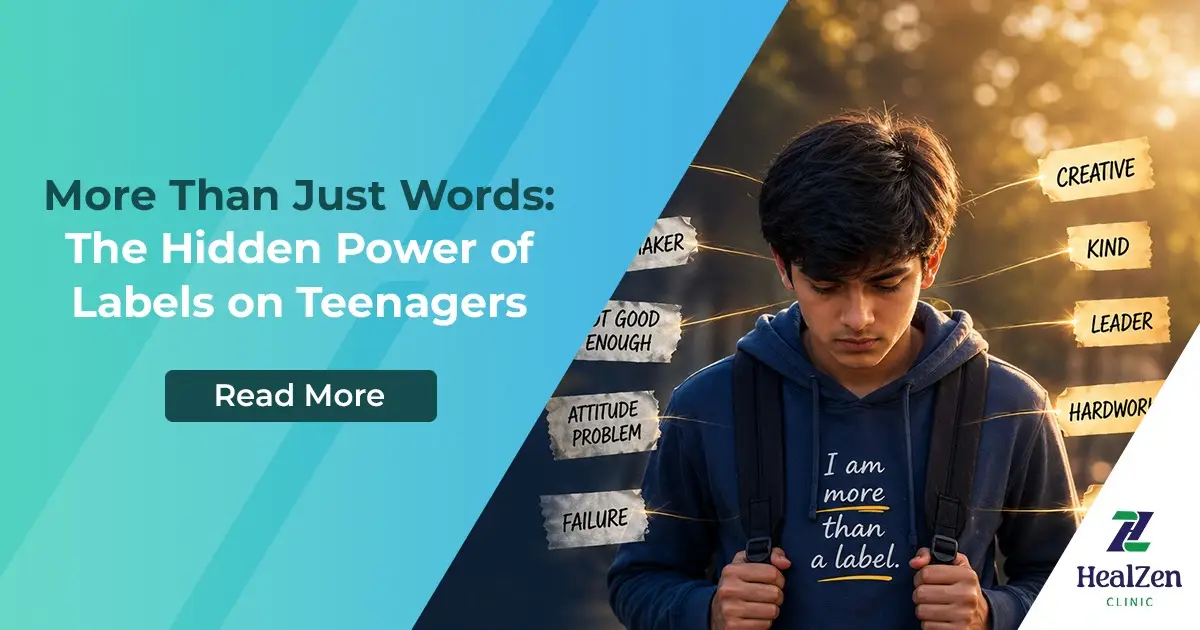
What We See vs. What We Miss: An Introduction
“Kids these days don’t pay attention.”
“All the time, they’re on their phones.”
“They don’t care about anything.”
Many homes today have these things in common.
Teenagers seem far away, distracted, or not emotionally available. Talking to people feels harder. Reactions feel more intense. The silence feels heavier.
And naturally, adults ask:
What’s wrong with this generation?
But what if the real question is:
What are we unknowingly doing that shapes how they see themselves?
One of the most subtle yet powerful influences is something we rarely pause to examine—the labels we use.
The Adolescent Mind: A Work in Progress
Adolescence is not just a transition; it’s a construction phase of identity.
According to Erik Erikson, this stage is defined as Identity vs. Role Confusion. Teenagers are actively trying to answer:
- Who am I, really?
- Where do I belong?
- Am I capable?
- Am I worthy?
At this stage, they are highly sensitive to external feedback, especially from parents, teachers, and authority figures.
Because when they don’t yet fully know who they are… they borrow identities from what they hear repeatedly.
The Problem: When Labels Take the Place of Understanding
It’s common for labels to start off casually:
- “You’re so lazy.”
- “You’re too emotional.”
- “You’re always careless.”
- “Why can’t you be like everyone else?”
These may seem like short-term annoyances, but to a teenager, they are patterns.
These words don’t sound like opinions anymore after a while…
and begin to seem like facts.
The Deeper Problems Caused by Labeling
Let’s go beyond the surface and understand what really happens internally.
1. Identity Gets Replaced by Assumptions
Instead of exploring who they are, teenagers begin to accept ready-made identities.
A teen who hears “you’re shy” repeatedly may stop trying to speak up—not because they can’t, but because:
“This is just who I am.”
This limits growth before it even begins.
2. Internal Dialogue Turns Negative
What starts as an external voice becomes an internal one.
“You’re not good enough” →
becomes →
“I’m not good enough.”
This shift is dangerous because now the criticism is constant, even when no one is saying anything.
3. Emotional Disconnect Deepens
When teenagers feel misunderstood or judged, they don’t open up, they withdraw.
- They stop sharing their thoughts
- They hide their struggles
- They avoid vulnerability
Not because they don’t need support…but because they don’t feel safe enough to seek it.
4. Self-Esteem Erodes Slowly
Labels chip away at confidence over time.
A teen labeled as “careless” may:
- Stop taking responsibility
- Avoid challenges
- Fear failure
Because trying and failing would only “prove” the label right.
5. Behaviour Begins to Match the Label
This is where it becomes a self-fulfilling prophecy.
- “Troublemaker” → acts out more
- “Weak” → avoids challenges
- “Lazy” → stops putting effort
Not because they are inherently that way…but because they begin to believe there’s no point in being anything else.
6. Pressure from “Positive Labels”
Even labels that sound good can create hidden pressure.
“The smart one”
“The responsible one”
“The strong one”
These can lead to:
- Fear of failure
- Hiding struggles
- Emotional suppression
Because now they feel they must always live up to that image.
The Cultural Layer: Comparison & Expectation
In many Indian households, comparison is often used as motivation:
“Look at Sharma ji’s son.”
“Others your age are doing so well.”
But what teenagers hear is:
- “You’re not enough.”
- “You’re falling behind.”
This creates:
- Shame
- Anxiety
- Constant self-comparison
And instead of building confidence, it pushes them toward external validation.
What Can We Do Instead?
The solution is not silence, it’s conscious communication.
Separate Behaviour from Identity
“You didn’t handle this well” is very different from “You’re irresponsible.” One allows growth. The other creates limitation.
Replace Judgment with Curiosity
Instead of reacting, ask:
- “What’s going on?”
- “What made this difficult?”
Understanding opens doors that judgment closes.
Create Emotional Safety
Teenagers open up where they feel:
- Heard
- Accepted
- Not judged
Without safety, there is silence.
Normalize Struggle
Remind them:
- It’s okay to not have clarity
- It’s okay to fail
- It’s okay to change
Because growth is not linear and neither is identity.
See the Emotion Behind the Behaviour
Often:
- “Laziness” = burnout
- “Anger” = frustration
- “Silence” = overwhelm
When we respond to the emotion, not just the behavior, connection improves.
Final Thought: The Words That Stay
Teenagers may forget lectures, They may ignore advice, They may resist rules.
But they rarely forget how they were made to feel. And more importantly—they don’t forget the words that slowly became their identity.
A label, repeated enough times, can shape how a person sees themselves for years… sometimes even a lifetime.
So before saying:
“You’re difficult”
“You’re lazy”
“You’re not enough”
Pause and ask:
Am I helping them grow… or defining who they become?
Because in the end, we are not just raising children, we are shaping the voice they will carry inside their head forever. The words we use today quietly shape a teenager’s inner voice for years to come—choose them with awareness, empathy, and intent. If you’re noticing emotional distance, low confidence, or behavioural changes, it may be time to look beyond labels and understand the deeper need. Connect with our psychological experts to create a safe, supportive space where your child can build a healthy identity and thrive with confidence.