

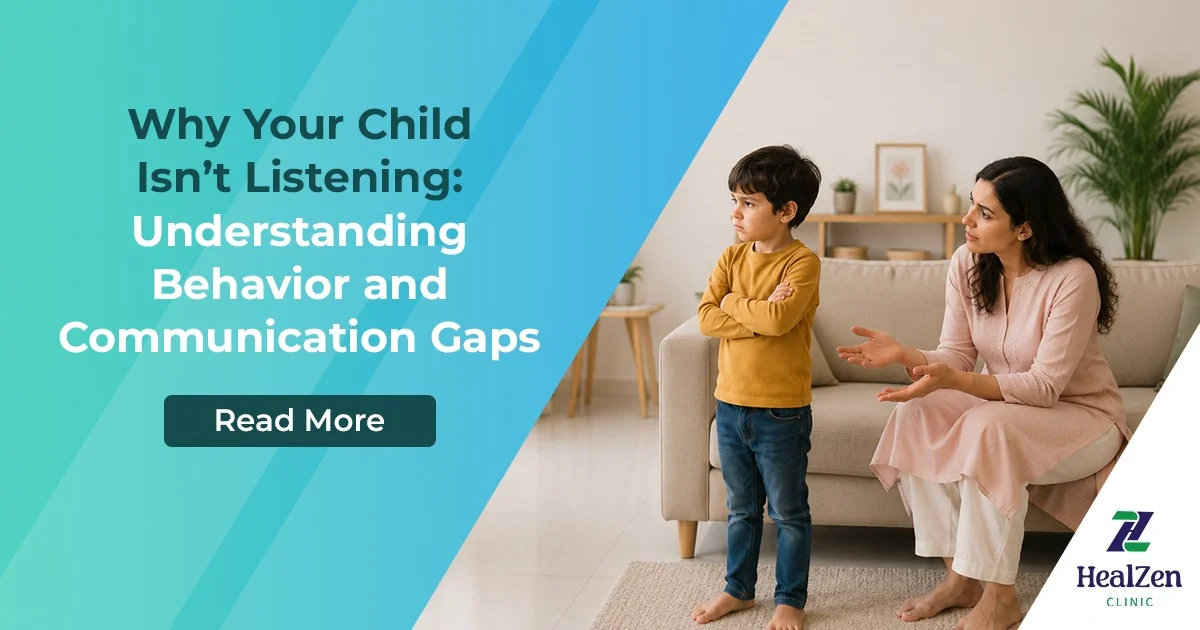
One of the most common concerns parents share is: “My child just doesn’t listen.”
But if we look a little deeper, most of the time, it’s not really about listening—it’s about understanding.
Children are constantly communicating. Even when they are not using words, their behavior is speaking for them.
Every behavior is need-based
A powerful shift happens when we begin to see this:
Every behavior has a need behind it.
When a child refuses, argues, ignores, cries, or throws a tantrum, it’s easy to label it as “bad behavior” or “not listening.” But underneath that behavior, there is usually an unmet need.
Some common needs behind children’s behavior:
- Need for attention or connection
- Need for independence or control
- Need to feel heard or understood
- Need for rest, food, or sensory regulation
- Need for emotional support (feeling overwhelmed, anxious, or frustrated)
When we respond only to the behavior (“Stop shouting!” “Listen to me!”), we miss the real message.
But when we pause and ask, “What might my child need right now?”, communication begins to open.
Simple Examples
-
Child ignores you when you call them
- What we see: “Not listening”
- Possible need: They are deeply engaged in play and need transition support
- Better response:
“I see you’re enjoying your game. In 5 minutes, we’ll go for dinner.”
-
Child throws a tantrum in a store
- What we see: “Stubborn or demanding”
- Possible need: Overstimulation, hunger, or feeling overwhelmed
- Better response:
“It’s a lot here, isn’t it? Let’s take a small break.”
-
Child argues or says “no” to everything
- What we see: “Disrespect”
- Possible need: Autonomy and control
- Better response:
“Would you like to do this now or after 10 minutes?”
-
Child keeps interrupting
- What we see: “Not listening or rude”
- Possible need: Connection and attention
- Better response:
“I want to hear you. Give me one minute, and then I’m all yours.”
Why the communication gap happens
Often, the gap is not because children don’t understand—but because:
- They feel unheard or rushed
- Instructions are given without connection
- There is too much telling and not enough listening
- Emotions are dismissed (“Stop crying,” “It’s nothing”)
- Expectations are not age-appropriate
Children cooperate more when they feel connected, not controlled.
How to Improve the Communication Gap
Improving communication doesn’t mean saying more—it means connecting better.
-
Connect before you correct
Before giving instructions, build connection.
Instead of:
“Switch off the TV right now.”
Try:
(Sit next to them) “You really like this show, don’t you? After this episode, we’ll switch it off.”
-
Acknowledge their feelings
When children feel understood, they are more open to listening.
Instead of:
“Don’t be silly, it’s not scary.”
Try:
“I can see you’re feeling scared. I’m here with you.”
-
Use simple and clear language
Long explanations often get lost.
Instead of:
“How many times have I told you to keep your things properly…”
Try:
“Please put your shoes on the rack.”
-
Offer choices
This reduces power struggles and gives them a sense of control.
“Do you want to finish homework now or after your snack?”
-
Be mindful of timing
Children don’t process well when:
- They are tired
- Hungry
- Overstimulated
Sometimes, it’s not resistance – it’s capacity.
-
Listen to understand, not just respond
Pause and truly hear them.
When a child says:
“You never play with me!”
Instead of defending, try:
“You wish we spent more time together, right?”
-
Model the communication you expect
Children learn how to communicate by watching us.
If we shout, they learn shouting.
If we listen, they learn listening.
The takeaway
When a child “isn’t listening,” it’s often a sign that something deeper needs attention.
Instead of asking:
“Why is my child behaving like this?”
Try asking:
“What is my child trying to tell me?”
This one shift—from reacting to behavior to understanding the need—can transform your relationship with your child.
Because at the heart of it, children don’t need perfect parents. They need parents who are willing to pause, understand, and connect.